
ARIFLEX Anti CD19 CAR-T
Ariflex™: Humanized Anti-CD19 CAR-T for Relapsed and Refractory B-Cell Cancers
For patients who have exhausted standard options, Ariflex offers a powerful, targeted cell therapy built on a fully humanized CD19 binder, advanced 4-1BB costimulation, and compelling preclinical and clinical data in aggressive hematologic tumors.
What Makes Ariflex Different
Ariflex is built on a humanized version of the classic FMC63 CD19 scFv, engineered into a second-generation CAR with CD8 hinge/transmembrane, 4-1BB costimulatory domain, and CD3ζ signaling for potent yet controlled T-cell activation. This humanized architecture is designed to:
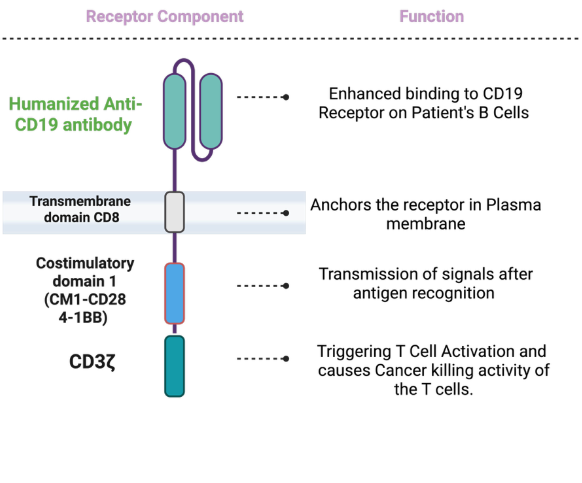
- Reduce immunogenicity versus murine CD19 CARs, enabling better persistence and retreatment potential
- Maintain or exceed the cytotoxic potency of standard FMC63-based products in vitro
- Support a favorable safety profile in the clinic, with lower rates and severity of treatment-related toxicities reported versus murine CD19 CAR-T
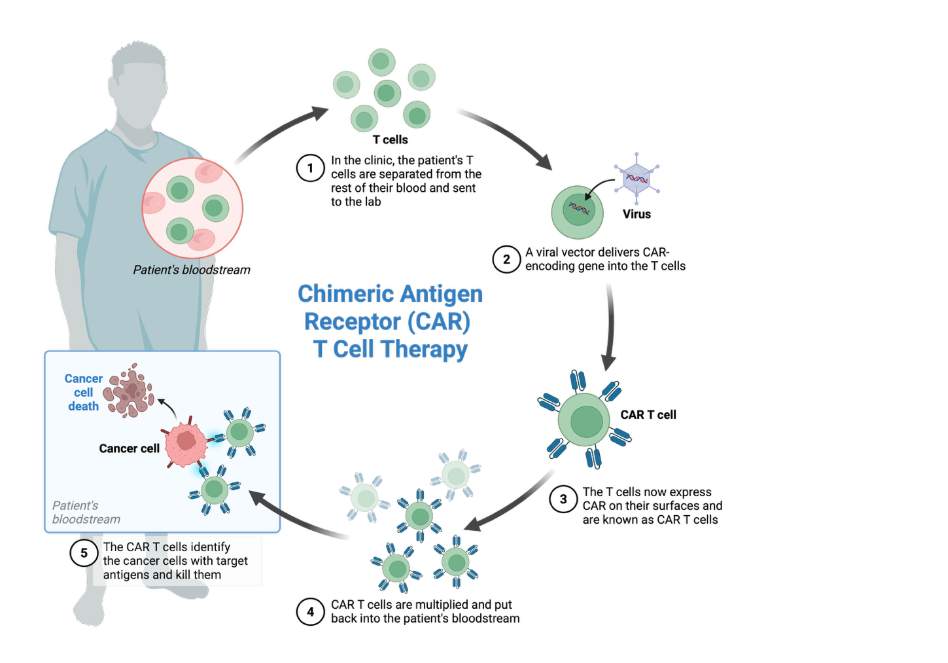
Ariflex CAR-T cells are manufactured using a lentiviral vector encoding the humanized anti-CD19 scFv with CD137 (4-1BB) co-stimulation and are administered intravenously following standard lymphodepleting chemotherapy.
Our Results
Breakthrough Mouse Tumor Data
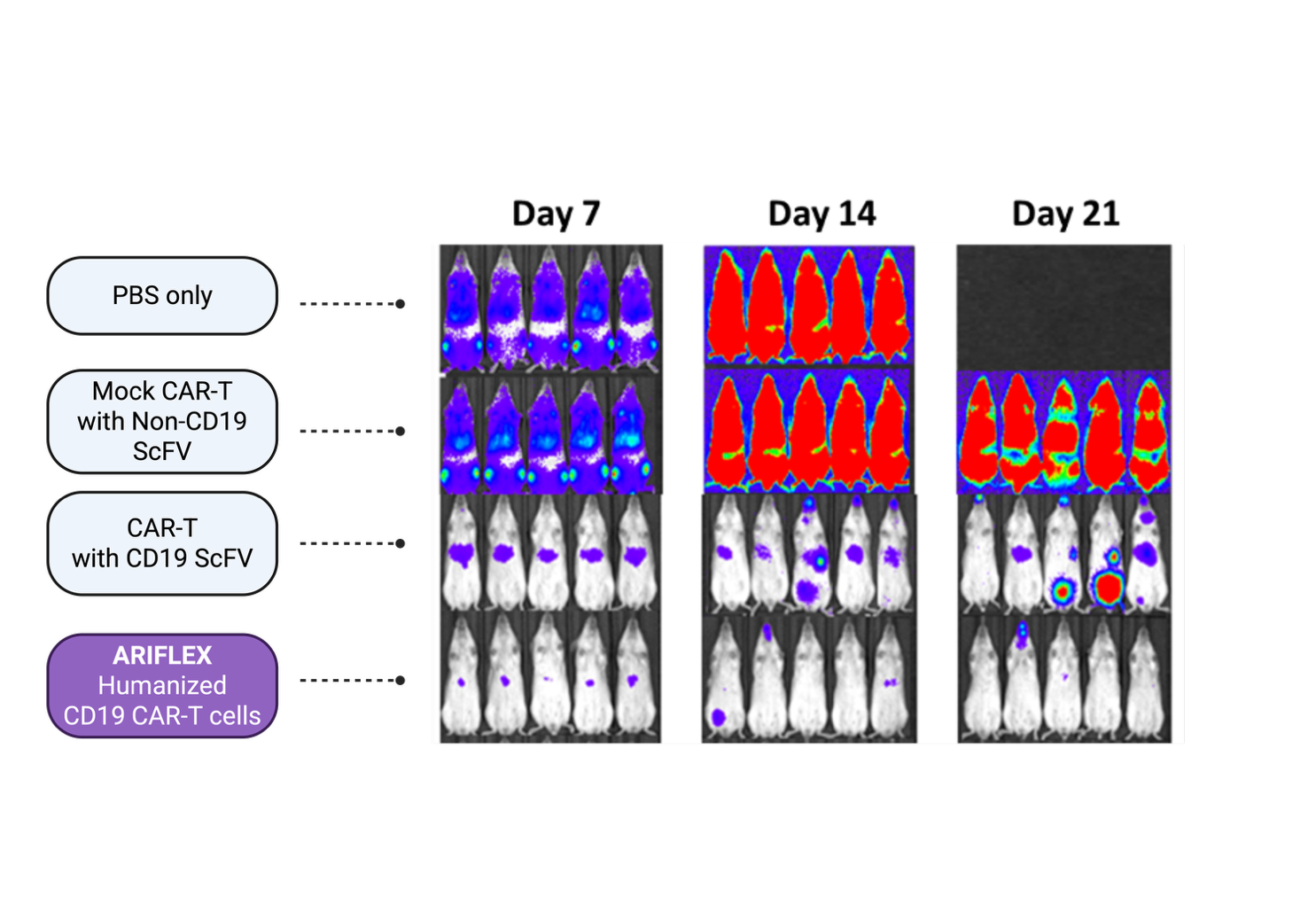
In an NSG xenograft model using luciferase-expressing Raji leukemia cells, Ariflex humanized CD19 CAR-T cells demonstrated robust in vivo tumor control and survival benefit.
- Near-complete suppression of Raji tumor growth after a single Ariflex CAR-T infusion, compared with rapid progression in PBS, mock CAR-T, or non-humanized CD19 CAR-T controls
- Prevention of tumor-induced weight loss, indicating preservation of overall health and functional status in treated mice
- Prolonged survival: 3 of 5 mice treated with Ariflex remained alive 7 weeks after a single dose, whereas PBS-treated animals died before day 21
- On-target persistence: Approximately 3% of circulating leukocytes were human T cells at day 7, and approximately 10% of these were Ariflex humanized CD19 CAR-T cells, demonstrating in vivo expansion and persistence
These data show that Ariflex delivers potent anti-tumor activity in vivo while maintaining tolerability in a stringent systemic leukemia model.
Human Clinical Experience
The Ariflex construct (human CD19 CAR-T with humanized scFv and 4-1BB costimulation) has been evaluated in a phase I, single-arm, open-label study of adults with relapsed and refractory B-cell hematologic malignancies, including B-ALL and aggressive B-cell lymphomas, who had no effective treatment options remaining.
Study Design Highlights
1.Population: 10 heavily pre-treated subjects with CD19-positive B-cell tumors, including B-ALL and DLBCL, many with prior transplant and some with prior murine CD19 CAR-T exposure .
2.Treatment: Humanized CD19 CAR-T cells ARIFLEX
3.Follow-up: Response assessed per NCCN ALL guidelines, with long-term follow-up for survival, relapse, and CAR-T persistence up to 5 years.
Efficacy Signals
- The trial concluded that human CD19 CAR-T therapy using this humanized construct is both safe and effective for relapsed and refractory hematologic tumors
- The complete remission rate was significantly improved compared with outcomes achieved historically using murine CD19 CAR-T, indicating enhanced depth of response with the humanized design
- Overall remission rate (CR + PR) and survival outcomes are being followed over 1--5 years using Kaplan-Meier methodology, supporting durability assessment over time
Safety and Tolerability
- The study reported that adverse effects, including cytokine release syndrome (CRS) and other toxicities, were significantly reduced compared with murine CD19 CAR-T therapy, underscoring a favorable safety profile
- Safety evaluation included all adverse events, serious adverse events, and clinically significant laboratory abnormalities, with grading by CTCAE v4.0 and focused monitoring of CRS as an adverse event of special interest
Together, these data suggest that Ariflex can deliver high remission rates with a more manageable safety profile in a population with high unmet medical need.
Why a Humanized CD19 CAR Matters
Murine scFv-based CAR-T products can trigger anti-drug immune responses that limit persistence, retreatment, and long-term benefit. Ariflex addresses this by humanizing the FMC63 scFv, preserving target affinity while reducing non-human sequences that can drive immunogenicity.
This design is intended to:
- Improve T-cell persistence in vivo and support long-term disease control
- Enable safer repeat dosing strategies when clinically indicated
- Decrease the incidence and severity of immune-mediated toxicities compared with murine constructs
Indications in Development
Ariflex is being advanced for adults with relapsed or refractory CD19-positive B-cell malignancies, including:
- B-cell acute lymphoblastic leukemia (B-ALL)
- Indolent B-cell lymphomas (e.g., CLL, FL, MZL, LPL)
- Aggressive B-cell lymphomas (e.g., DLBCL, BL, MCL)
Contact Cambridge GenetiX to learn more about Ariflex, partnering opportunities, and ongoing development plans.
Clinicians and investigators: reach out to discuss trial design, compassionate use, or investigator-initiated studies using our humanized CD19 CAR-T platform.